 ADDED TO MY FAVORITES!
 REMOVED FROM MY FAVORITES!


Properties and Overview of Bronze Alloy CA104
Overview:
 Bronze Alloys renowned for their rich history and exceptional properties, are vital to metallurgy and have uses spanning millennia. Typically composed of copper and tin, with possible additions of other elements like aluminum, nickel, or phosphorus, bronze is celebrated for its strength, durability, and resistance to corrosion. These characteristics make it an indispensable material in a wide range of applications.
Production:
The production of bronze begins with the precise blending of copper and tin, melted together in controlled conditions. Additional elements are often introduced during smelting to enhance specific attributes, such as wear resistance or machinability. Once molten, the bronze is cast into molds to form ingots, which are processed into various shapes and forms. Advanced techniques like centrifugal and continuous casting often produce high-quality bronze components with uniform properties. The alloy's versatility allows it to be formed into sheets, rods, wires, and complex parts, catering to diverse industrial and artistic needs.
Applications:
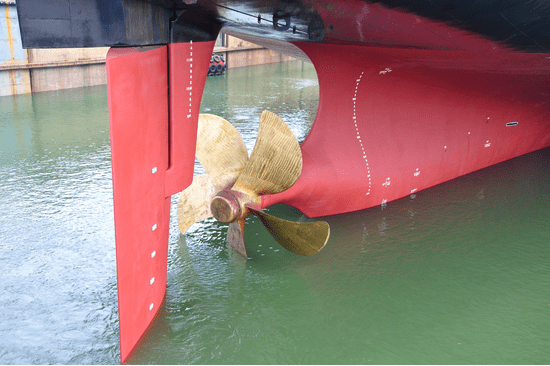
Bronze alloys find applications across numerous fields. In industrial settings, they are prized for their resistance to wear and corrosion, making them ideal for machinery components like bushings, bearings, and gears. Their non-sparking nature makes them essential in environments where flammable substances are present, such as in manufacturing tools for the petrochemical and mining industries. Bronze's excellent conductivity and durability have established its role in electrical systems used for connectors and terminals. Its resistance to seawater corrosion has made it a cornerstone of marine engineering, where it is employed in ship propellers, hull fittings, and underwater components. Beyond these functional uses, bronze's aesthetic qualities have made it a favored material for sculptures, monuments, and decorative elements, reflecting its enduring cultural significance.
The significance of bronze alloys extends beyond their technical properties to their role in sustainable manufacturing. Like brass, bronze is highly recyclable, and much of its production relies on recycled materials. This conserves resources and reduces the environmental impact of production processes, aligning with global sustainability goals.
Summary:
Bronze alloys embody a unique blend of historical legacy and modern utility. Their adaptability, strength, and corrosion resistance make them a material of choice across industries ranging from marine engineering to fine art. As innovation expands their applications and manufacturing processes, bronze remains a timeless alloy, bridging the gap between tradition and progress.
See a comprehensive list of electrical, mechanical, physical and thermal properties for Bronze Alloy CA104 below:
Electrical Properties of Bronze Alloy CA104
Unfamiliar with a property? Click it's description to be given a full definition in the GLOSSARY
See properties and overview for
POLYMERS and CHEMICAL ELEMENTS
popular in engineering
Require different units not displayed?
CONVERT VARIOUS UNITS HERE
Mechanical Properties of Bronze Alloy CA104
| Mechanical Property (Units) | Value |
|---|---|
| Bronze Alloy CA104 Compressive Strength (MPa) | ~600 |
| Bronze Alloy CA104 Ductile to Brittle Transition Temperature (°C) | Unknown |
| Bronze Alloy CA104 Fatigue Limit (MPa) | ~160 to 180 |
| Bronze Alloy CA104 Fracture Toughness (MPa·√m) | ~70 to 90 |
| Bronze Alloy CA104 Hardness Brinell | 160 to 200 |
| Bronze Alloy CA104 Hardness Rockwell | 85 HRB to 20 HRC |
| Bronze Alloy CA104 Hardness Vickers | 170 to 220 |
| Bronze Alloy CA104 Heat Deflection Temperature (°C) | N/A - Not a Polymer |
| Bronze Alloy CA104 Modulus of Elasticity / Young's Modulus (GPa) | 110 to 115 |
| Bronze Alloy CA104 Percent Elongation (%) | 15 to 20 |
| Bronze Alloy CA104 Poissons Ratio | 0.34 |
| Bronze Alloy CA104 Shear Modulus (GPa) | 42 to 44 |
| Bronze Alloy CA104 Shear Strength (MPa) | 180 to 240 |
| Bronze Alloy CA104 Ultimate Tensile Strength (MPa) | 600 to 750 |
| Bronze Alloy CA104 Yield Strength (MPa) | 300 to 450 |
Unfamiliar with a property? Click it's description to be given a full definition in the GLOSSARY
See properties and overview for
POLYMERS and CHEMICAL ELEMENTS
popular in engineering
Require different units not displayed?
CONVERT VARIOUS UNITS HERE
Physical Properties of Bronze Alloy CA104
| Physical Property (Units) | Value |
|---|---|
| Bronze Alloy CA104 Boiling Point at Atmospheric Pressure (°C) | Unknown |
| Bronze Alloy CA104 Chemical Composition (Element %) | Cu 88.0-91.0%, Al 9.0-11.0%, Fe ≤ 0.50%, Ni ≤ 0.50% |
| Bronze Alloy CA104 Cost ($/kg) | 10 to 15 |
| Bronze Alloy CA104 Density at 'Standard Temperature and Pressure' (kg/m3) | 7700 |
| Bronze Alloy CA104 Glass Transition Temperature at Atmospheric Pressure (°C) | N/A - Not a Polymer |
| Bronze Alloy CA104 Melting Point at Atmospheric Pressure (°C) | 1025 to 1045 |
| Bronze Alloy CA104 Polymer Family | N/A - Not a Polymer |
| Bronze Alloy CA104 Refractive Index | Unknown |
| Bronze Alloy CA104 Specific Gravity | 7.7 |
| Bronze Alloy CA104 Viscosity at Melting Point (mPa·s) | 3 to 6 |
Unfamiliar with a property? Click it's description to be given a full definition in the GLOSSARY
See properties and overview for
POLYMERS and CHEMICAL ELEMENTS
popular in engineering
Require different units not displayed?
CONVERT VARIOUS UNITS HERE
Thermal Properties of Bronze Alloy CA104
| Thermal Property (Units) | Value |
|---|---|
| Bronze Alloy CA104 Coefficient of Thermal Expansion (µm/m·K) | 16.5 to 17.0 |
| Bronze Alloy CA104 Emissivity Coefficient | 0.30 to 0.35 |
| Bronze Alloy CA104 Specific Heat Capacity (J/kg·K) | 377 |
| Bronze Alloy CA104 Thermal Conductivity (W/m.K) | 50 |
| Bronze Alloy CA104 Thermal Conductivity (BTU/h·ft·°F) | 28.91 |
Unfamiliar with a property? Click it's description to be given a full definition in the GLOSSARY
See properties and overview for
POLYMERS and CHEMICAL ELEMENTS
popular in engineering
Require different units not displayed?
CONVERT VARIOUS UNITS HERE