 ADDED TO MY FAVORITES!
 REMOVED FROM MY FAVORITES!


Properties and Overview of Copper Alloy Constantan
Overview:
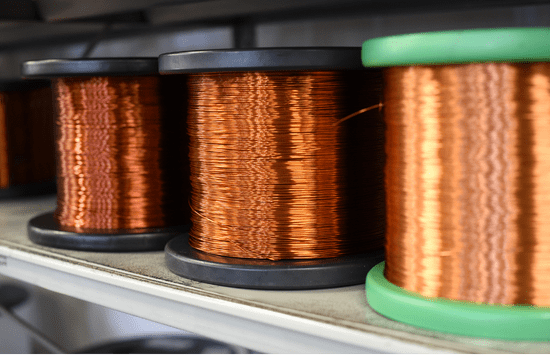 Copper Alloys are a critical component of modern industry, valued for their exceptional conductivity, corrosion resistance, and versatility. Combining copper with other elements such as zinc, tin, aluminum, or nickel creates a wide range of alloys, each tailored to specific applications. This adaptability has made copper alloys a cornerstone of traditional craftsmanship and cutting-edge engineering.
Production:
The production of copper alloys begins with the selection and combination of raw materials. Copper is melted with alloying elements in carefully controlled proportions to achieve the desired characteristics. The molten mixture is cast into ingots or billets, which are then processed into usable forms through rolling, extrusion, or forging techniques. Advances in metallurgical processes, including continuous casting and precision alloying, have further enhanced the quality and performance of copper alloys. Surface treatments, heat treatments, and other post-processing methods may also be applied to improve durability, machinability, or appearance.
Applications:
Applications of copper alloys span an extraordinary range of industries. In electrical engineering, copper’s unparalleled conductivity makes its alloys indispensable for wires, connectors, and electronic components. Brass, a prominent copper-zinc alloy, is widely used in plumbing, mechanical components, and decorative items due to its strength, corrosion resistance, and aesthetic appeal. Bronze, a copper-tin alloy, is revered for its durability and has applications in bearings, marine components, and artistic sculptures. Copper-nickel alloys, known for their excellent resistance to seawater corrosion, are commonly employed in shipbuilding, desalination plants, and offshore platforms. Additionally, copper alloys are used in coinage, musical instruments, and heat exchangers, where their combination of strength, malleability, and thermal conductivity proves invaluable.
The environmental benefits of copper alloys further enhance their significance. Copper and its alloys are highly recyclable, with a substantial proportion of production relying on recycled materials. This reduces the environmental impact of mining and extraction while conserving natural resources. Despite these advantages, challenges such as material cost and susceptibility to oxidation in specific environments drive ongoing research into protective coatings, advanced alloy formulations, and improved processing techniques.
Summary:
Copper alloys exemplify the fusion of tradition and innovation, offering properties that address the diverse needs of industries worldwide. From enhancing the efficiency of electrical systems to shaping timeless works of art, these alloys remain an essential material in both practical and creative domains. As sustainability and technological advancements continue to shape global priorities, copper alloys will remain vital in enabling progress and innovation across countless fields.
See a comprehensive list of electrical, mechanical, physical and thermal properties for Copper Alloy Constantan below:
Electrical Properties of Copper Alloy Constantan
Unfamiliar with a property? Click it's description to be given a full definition in the GLOSSARY
See properties and overview for
POLYMERS and CHEMICAL ELEMENTS
popular in engineering
Require different units not displayed?
CONVERT VARIOUS UNITS HERE
Mechanical Properties of Copper Alloy Constantan
| Mechanical Property (Units) | Value |
|---|---|
| Copper Alloy Constantan Compressive Strength (MPa) | ~500 |
| Copper Alloy Constantan Ductile to Brittle Transition Temperature (°C) | Unknown |
| Copper Alloy Constantan Fatigue Limit (MPa) | ~70 to 90 |
| Copper Alloy Constantan Fracture Toughness (MPa·√m) | ~30 to 35 |
| Copper Alloy Constantan Hardness Brinell | 75 to 100 |
| Copper Alloy Constantan Hardness Rockwell | 60 to 65 HRB |
| Copper Alloy Constantan Hardness Vickers | 90 to 120 |
| Copper Alloy Constantan Heat Deflection Temperature (°C) | N/A - Not a Polymer |
| Copper Alloy Constantan Modulus of Elasticity / Young's Modulus (GPa) | 162 to 177 |
| Copper Alloy Constantan Percent Elongation (%) | 25 |
| Copper Alloy Constantan Poissons Ratio | 0.34 |
| Copper Alloy Constantan Shear Modulus (GPa) | 65 to 70 |
| Copper Alloy Constantan Shear Strength (MPa) | 310 |
| Copper Alloy Constantan Ultimate Tensile Strength (MPa) | 500 to 550 |
| Copper Alloy Constantan Yield Strength (MPa) | 300 to 350 |
Unfamiliar with a property? Click it's description to be given a full definition in the GLOSSARY
See properties and overview for
POLYMERS and CHEMICAL ELEMENTS
popular in engineering
Require different units not displayed?
CONVERT VARIOUS UNITS HERE
Physical Properties of Copper Alloy Constantan
| Physical Property (Units) | Value |
|---|---|
| Copper Alloy Constantan Boiling Point at Atmospheric Pressure (°C) | Unknown |
| Copper Alloy Constantan Chemical Composition (Element %) | Cu 55%, Ni 45% |
| Copper Alloy Constantan Cost ($/kg) | 40 to 50 |
| Copper Alloy Constantan Density at 'Standard Temperature and Pressure' (kg/m3) | 8900 |
| Copper Alloy Constantan Glass Transition Temperature at Atmospheric Pressure (°C) | N/A - Not a Polymer |
| Copper Alloy Constantan Melting Point at Atmospheric Pressure (°C) | 1170 to 1250 |
| Copper Alloy Constantan Polymer Family | N/A - Not a Polymer |
| Copper Alloy Constantan Refractive Index | Unknown |
| Copper Alloy Constantan Specific Gravity | 8.9 |
| Copper Alloy Constantan Viscosity at Melting Point (mPa·s) | 3 to 5 |
Unfamiliar with a property? Click it's description to be given a full definition in the GLOSSARY
See properties and overview for
POLYMERS and CHEMICAL ELEMENTS
popular in engineering
Require different units not displayed?
CONVERT VARIOUS UNITS HERE
Thermal Properties of Copper Alloy Constantan
| Thermal Property (Units) | Value |
|---|---|
| Copper Alloy Constantan Coefficient of Thermal Expansion (µm/m·K) | 16.0 to 17.0 |
| Copper Alloy Constantan Emissivity Coefficient | 0.15 to 0.25 |
| Copper Alloy Constantan Specific Heat Capacity (J/kg·K) | 410 |
| Copper Alloy Constantan Thermal Conductivity (W/m.K) | 22 |
| Copper Alloy Constantan Thermal Conductivity (BTU/h·ft·°F) | 12.72 |
Unfamiliar with a property? Click it's description to be given a full definition in the GLOSSARY
See properties and overview for
POLYMERS and CHEMICAL ELEMENTS
popular in engineering
Require different units not displayed?
CONVERT VARIOUS UNITS HERE