 ADDED TO MY FAVORITES!
 REMOVED FROM MY FAVORITES!


Properties and Overview of Engineering Steel EN8
Overview:
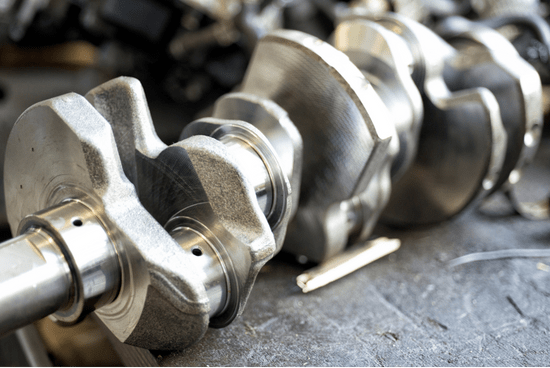 Engineering Steel is a versatile and high-performance material designed to meet the demanding requirements of industries that rely on strength, durability, and machinability. These steels are formulated explicitly with varying carbon, manganese, chromium, nickel compositions, and other elements to enhance mechanical properties like toughness, wear resistance, and fatigue strength. Engineering steel is widely used in applications where precision and reliability are critical, making it a cornerstone of modern manufacturing and construction.
Production:
The production of engineering steel begins with carefully selecting raw materials, including iron ore and alloying elements, which are melted in a furnace to create a homogeneous mixture. Advanced techniques such as basic oxygen steelmaking (BOS) or electric arc furnaces (EAF) are employed to refine the steel and control its composition. Once the molten steel reaches the desired specification, it is cast into billets or slabs and undergoes various processes such as rolling, forging, and heat treatment. These steps are crucial for tailoring the microstructure and mechanical properties of the steel to specific applications. Heat treatments like quenching, tempering, or annealing often optimize strength, hardness, or ductility, ensuring the material performs under diverse operational conditions.
Applications:
Engineering steel finds applications across a broad spectrum of industries. In the automotive sector, it is commonly used for components such as gears, axles, and crankshafts, where its strength and fatigue resistance are critical. Engineering steel is essential for structural components, fasteners, and reinforcements in construction, ensuring stability and longevity in buildings and infrastructure. The energy sector relies on high-performance steel for turbines, pipelines, and drilling equipment, which must withstand extreme temperatures, pressures, and corrosive environments. The material is used for machine tools, molds, and dies in manufacturing due to its wear resistance and machinability. Furthermore, engineering steel is a key material in producing railway tracks, aerospace components, and defense equipment, where reliability and safety are paramount.
Engineering steel's adaptability, coupled with advancements in alloy design and processing technologies, continues to expand its range of applications. Researchers are exploring innovative methods to enhance performance, such as developing ultra-high-strength steels and integrating sustainable production practices. Efforts to improve recyclability and reduce the environmental footprint of steel manufacturing are also gaining momentum, aligning with global goals for sustainability.
Summary:
Engineering Steel is a fundamental material that underpins countless aspects of modern industry and infrastructure. Its exceptional strength, durability, and versatility have made it indispensable in applications that demand reliability and performance. As advancements in material science and manufacturing continue to evolve, engineering steel will remain a critical enabler of progress, driving innovation and supporting the growth of industries worldwide.
See a comprehensive list of electrical, mechanical, physical and thermal properties for Engineering Steel EN8 below:
Electrical Properties of Engineering Steel EN8
Unfamiliar with a property? Click it's description to be given a full definition in the GLOSSARY
See properties and overview for
POLYMERS and CHEMICAL ELEMENTS
popular in engineering
Require different units not displayed?
CONVERT VARIOUS UNITS HERE
Mechanical Properties of Engineering Steel EN8
| Mechanical Property (Units) | Value |
|---|---|
| Engineering Steel EN8 Compressive Strength (MPa) | ~900 |
| Engineering Steel EN8 Ductile to Brittle Transition Temperature (°C) | ~-50 |
| Engineering Steel EN8 Fatigue Limit (MPa) | 200 to 250 |
| Engineering Steel EN8 Fracture Toughness (MPa·√m) | ~60 |
| Engineering Steel EN8 Hardness Brinell | 150 to 220 |
| Engineering Steel EN8 Hardness Rockwell | 80 HRB to 20 HRC |
| Engineering Steel EN8 Hardness Vickers | 160 to 230 |
| Engineering Steel EN8 Heat Deflection Temperature (°C) | N/A - Not a Polymer |
| Engineering Steel EN8 Modulus of Elasticity / Young's Modulus (GPa) | 205 |
| Engineering Steel EN8 Percent Elongation (%) | 10 to 15 |
| Engineering Steel EN8 Poissons Ratio | 0.29 |
| Engineering Steel EN8 Shear Modulus (GPa) | 80 |
| Engineering Steel EN8 Shear Strength (MPa) | 360 to 400 |
| Engineering Steel EN8 Ultimate Tensile Strength (MPa) | 550 to 800 |
| Engineering Steel EN8 Yield Strength (MPa) | 280 to 440 |
Unfamiliar with a property? Click it's description to be given a full definition in the GLOSSARY
See properties and overview for
POLYMERS and CHEMICAL ELEMENTS
popular in engineering
Require different units not displayed?
CONVERT VARIOUS UNITS HERE
Physical Properties of Engineering Steel EN8
| Physical Property (Units) | Value |
|---|---|
| Engineering Steel EN8 Boiling Point at Atmospheric Pressure (°C) | Unknown |
| Engineering Steel EN8 Chemical Composition (Element %) | C 0.36-0.44%, Mn 0.60-1.00%, Si 0.10-0.40%, S ≤ 0.050%, P ≤ 0.050%, Fe balance |
| Engineering Steel EN8 Cost ($/kg) | 1.2 to 3 |
| Engineering Steel EN8 Density at 'Standard Temperature and Pressure' (kg/m3) | 7850 |
| Engineering Steel EN8 Glass Transition Temperature at Atmospheric Pressure (°C) | N/A - Not a Polymer |
| Engineering Steel EN8 Melting Point at Atmospheric Pressure (°C) | 1370 to 1500 |
| Engineering Steel EN8 Polymer Family | N/A - Not a Polymer |
| Engineering Steel EN8 Refractive Index | Unknown |
| Engineering Steel EN8 Specific Gravity | 7.85 |
| Engineering Steel EN8 Viscosity at Melting Point (mPa·s) | 4 to 7 |
Unfamiliar with a property? Click it's description to be given a full definition in the GLOSSARY
See properties and overview for
POLYMERS and CHEMICAL ELEMENTS
popular in engineering
Require different units not displayed?
CONVERT VARIOUS UNITS HERE
Thermal Properties of Engineering Steel EN8
| Thermal Property (Units) | Value |
|---|---|
| Engineering Steel EN8 Coefficient of Thermal Expansion (µm/m·K) | 11.0 to 12.0 |
| Engineering Steel EN8 Emissivity Coefficient | 0.35 to 0.40 |
| Engineering Steel EN8 Specific Heat Capacity (J/kg·K) | 475 |
| Engineering Steel EN8 Thermal Conductivity (W/m.K) | 51 |
| Engineering Steel EN8 Thermal Conductivity (BTU/h·ft·°F) | 29.49 |
Unfamiliar with a property? Click it's description to be given a full definition in the GLOSSARY
See properties and overview for
POLYMERS and CHEMICAL ELEMENTS
popular in engineering
Require different units not displayed?
CONVERT VARIOUS UNITS HERE