 ADDED TO MY FAVORITES!
 REMOVED FROM MY FAVORITES!


Properties and Overview of Magnesium Alloy EV31A
Overview:
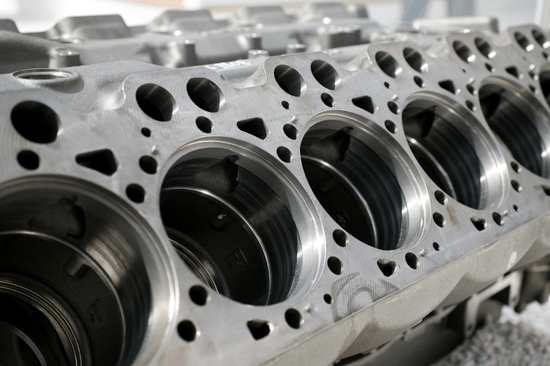 Magnesium Alloys are among the lightest structural materials available, combining a low density with excellent strength and versatility. These alloys, made primarily from magnesium combined with elements such as aluminum, zinc, manganese, and rare earth metals, are widely used in industries that demand lightweight solutions without compromising performance. Their unique properties, including good corrosion resistance and exceptional machinability, make them increasingly valuable in modern engineering and manufacturing.
Production:
The production of magnesium alloys begins with the extraction of magnesium, typically from sources like seawater or mineral deposits such as magnesite and dolomite. Once extracted, magnesium is combined with other alloying elements in a controlled environment to create specific compositions that enhance desired properties, such as strength or corrosion resistance. The molten alloy is then cast into billets, ingots, or near-net shapes using die casting, sand casting, or permanent mold casting. Advanced techniques like thixomolding and semi-solid casting are also employed to produce components with superior surface quality and mechanical properties. Post-casting processes, including machining, heat treatment, and surface finishing, refine the material further to meet application-specific requirements.
Applications:
Magnesium alloys are used across a diverse array of industries. In the automotive and aerospace sectors, their lightweight nature is crucial in reducing vehicle weight, improving fuel efficiency, and enhancing performance. Engine blocks, transmission cases, and aircraft structural parts frequently utilize magnesium alloys. Magnesium is a popular choice for housing and enclosures in electronics, as it provides robust protection while minimizing weight. Its thermal and electromagnetic shielding properties further enhance its appeal in this sector. Magnesium alloys are gaining attention in the biomedical field for their potential as biodegradable implants, particularly in bone repair applications, where they naturally dissolve after fulfilling their function. Additionally, they are used in sporting goods, portable tools, and even defense equipment, where weight reduction is a critical consideration.
Magnesium alloys also contribute to sustainability due to their recyclability and the relatively low energy required for their extraction and production compared to other metals. However, challenges like limited corrosion resistance in specific environments and the high cost of some alloying elements have driven ongoing research and innovation. Advances in protective coatings, alloy formulations, and manufacturing technologies are continually enhancing the performance and cost-effectiveness of magnesium alloys, broadening their application scope.
Summary:
Magnesium alloys represent a remarkable intersection of lightweight engineering and modern manufacturing demands. Their unique properties have made them indispensable in the automotive and biomedical industries. With continued advancements in processing techniques and material science, magnesium alloys are poised to play an even more significant role in addressing the challenges of efficiency, sustainability, and innovation in the years to come.
See a comprehensive list of electrical, mechanical, physical and thermal properties for Magnesium Alloy EV31A below:
Electrical Properties of Magnesium Alloy EV31A
Unfamiliar with a property? Click it's description to be given a full definition in the GLOSSARY
See properties and overview for
POLYMERS and CHEMICAL ELEMENTS
popular in engineering
Require different units not displayed?
CONVERT VARIOUS UNITS HERE
Mechanical Properties of Magnesium Alloy EV31A
| Mechanical Property (Units) | Value |
|---|---|
| Magnesium Alloy EV31A Compressive Strength (MPa) | ~350 |
| Magnesium Alloy EV31A Ductile to Brittle Transition Temperature (°C) | ~-50 |
| Magnesium Alloy EV31A Fatigue Limit (MPa) | ~90 to 120 |
| Magnesium Alloy EV31A Fracture Toughness (MPa·√m) | ~20 to 30 |
| Magnesium Alloy EV31A Hardness Brinell | 60 to 80 |
| Magnesium Alloy EV31A Hardness Rockwell | 40 to 50 HRB |
| Magnesium Alloy EV31A Hardness Vickers | 70 to 90 |
| Magnesium Alloy EV31A Heat Deflection Temperature (°C) | N/A - Not a Polymer |
| Magnesium Alloy EV31A Modulus of Elasticity / Young's Modulus (GPa) | 45 to 47 |
| Magnesium Alloy EV31A Percent Elongation (%) | 5 to 12 |
| Magnesium Alloy EV31A Poissons Ratio | 0.35 |
| Magnesium Alloy EV31A Shear Modulus (GPa) | 17 to 18 |
| Magnesium Alloy EV31A Shear Strength (MPa) | 150 to 180 |
| Magnesium Alloy EV31A Ultimate Tensile Strength (MPa) | 250 to 300 |
| Magnesium Alloy EV31A Yield Strength (MPa) | 140 to 180 |
Unfamiliar with a property? Click it's description to be given a full definition in the GLOSSARY
See properties and overview for
POLYMERS and CHEMICAL ELEMENTS
popular in engineering
Require different units not displayed?
CONVERT VARIOUS UNITS HERE
Physical Properties of Magnesium Alloy EV31A
| Physical Property (Units) | Value |
|---|---|
| Magnesium Alloy EV31A Boiling Point at Atmospheric Pressure (°C) | Unknown |
| Magnesium Alloy EV31A Chemical Composition (Element %) | Mg balance, Zr 0.40-0.70%, Nd 2.5-3.0%, Gd 1.0-1.5%, Mn ≤ 0.10% |
| Magnesium Alloy EV31A Cost ($/kg) | 10 to 15 |
| Magnesium Alloy EV31A Density at 'Standard Temperature and Pressure' (kg/m3) | 1800 |
| Magnesium Alloy EV31A Glass Transition Temperature at Atmospheric Pressure (°C) | N/A - Not a Polymer |
| Magnesium Alloy EV31A Melting Point at Atmospheric Pressure (°C) | 595 to 640 |
| Magnesium Alloy EV31A Polymer Family | N/A - Not a Polymer |
| Magnesium Alloy EV31A Refractive Index | Unknown |
| Magnesium Alloy EV31A Specific Gravity | 1.8 |
| Magnesium Alloy EV31A Viscosity at Melting Point (mPa·s) | 1.0 to 1.5 |
Unfamiliar with a property? Click it's description to be given a full definition in the GLOSSARY
See properties and overview for
POLYMERS and CHEMICAL ELEMENTS
popular in engineering
Require different units not displayed?
CONVERT VARIOUS UNITS HERE
Thermal Properties of Magnesium Alloy EV31A
| Thermal Property (Units) | Value |
|---|---|
| Magnesium Alloy EV31A Coefficient of Thermal Expansion (µm/m·K) | 26.6 |
| Magnesium Alloy EV31A Emissivity Coefficient | 0.40 to 0.45 |
| Magnesium Alloy EV31A Specific Heat Capacity (J/kg·K) | 1020 |
| Magnesium Alloy EV31A Thermal Conductivity (W/m.K) | 72 |
| Magnesium Alloy EV31A Thermal Conductivity (BTU/h·ft·°F) | 41.63 |
Unfamiliar with a property? Click it's description to be given a full definition in the GLOSSARY
See properties and overview for
POLYMERS and CHEMICAL ELEMENTS
popular in engineering
Require different units not displayed?
CONVERT VARIOUS UNITS HERE