 ADDED TO MY FAVORITES!
 REMOVED FROM MY FAVORITES!


Properties and Overview of Stainless Steel 431
Overview:
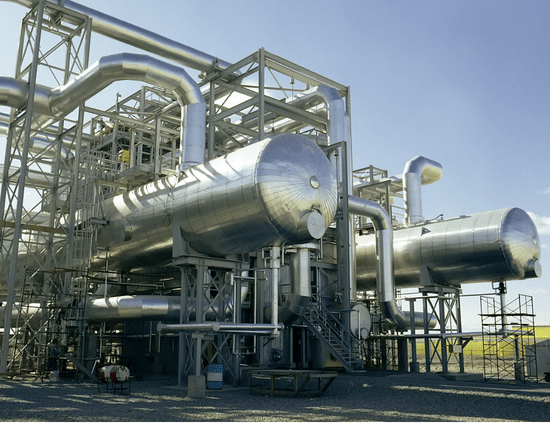 Stainless Steel is a versatile and highly durable material known for its corrosion resistance, strength, and aesthetic appeal. It is an alloy primarily composed of iron, chromium, and varying amounts of nickel, carbon, and other elements. The defining feature of stainless steel is its ability to form a passive layer of chromium oxide on its surface, which protects it from rust and staining, even in harsh environments. This unique combination of properties makes it an indispensable material across numerous industries, from construction to healthcare.
Production:
The production of stainless steel begins with the selection of raw materials, including iron ore, chromium, and other alloying elements. These materials are melted together in an electric arc furnace, where the composition is carefully controlled to achieve the desired grade of stainless steel. The molten alloy is refined to remove impurities and enhance purity, often using argon oxygen decarburization. Once refined, the stainless steel is cast into slabs or billets, which are then hot-rolled or cold-rolled into sheets, plates, bars, or wires. Additional processes such as annealing, pickling, and polishing may be applied to improve mechanical properties, surface finish, or corrosion resistance.
Applications:
Stainless steel finds applications across many industries due to its strength, corrosion resistance, and versatility. It is used for structural components, cladding, and architectural details, where its durability and aesthetic qualities are prized. Due to its biocompatibility and resistance to sterilization processes, the medical field relies on stainless steel for surgical instruments, implants, and hospital equipment. In the food and beverage industry, it is the material of choice for processing equipment, storage tanks, and utensils because of its hygiene and non-reactivity. The automotive and aerospace sectors utilize stainless steel for exhaust systems, engine components, and structural parts, benefiting from its high-temperature resistance and mechanical strength. Additionally, it plays a critical role in energy production, including nuclear power plants and renewable energy systems, where it endures extreme conditions and maintains long-term reliability.
The significance of stainless steel extends beyond its functional attributes to its role in sustainability. It is fully recyclable without losing quality, making it an environmentally friendly material that aligns with circular economy principles. Furthermore, ongoing innovations in alloy design and manufacturing processes enhance the performance and cost-efficiency of stainless steel, broaden its range of applications, and address challenges such as improving its resistance to specific chemical environments.
Summary:
Stainless steel is a cornerstone of modern industry and infrastructure, offering unmatched durability, corrosion resistance, and versatility. Its ability to meet the demands of diverse applications while contributing to sustainability underscores its importance in a rapidly evolving world. As technology advances and industries prioritize efficiency and environmental responsibility, stainless steel will continue to play a vital role in shaping the future of materials and engineering.
See a comprehensive list of electrical, mechanical, physical and thermal properties for Stainless Steel 431 below:
Electrical Properties of Stainless Steel 431
Unfamiliar with a property? Click it's description to be given a full definition in the GLOSSARY
See properties and overview for
POLYMERS and CHEMICAL ELEMENTS
popular in engineering
Require different units not displayed?
CONVERT VARIOUS UNITS HERE
Mechanical Properties of Stainless Steel 431
| Mechanical Property (Units) | Value |
|---|---|
| Stainless Steel 431 Compressive Strength (MPa) | 1500 - 1800 |
| Stainless Steel 431 Ductile to Brittle Transition Temperature (°C) | 0 to -50 |
| Stainless Steel 431 Fatigue Limit (MPa) | 230 |
| Stainless Steel 431 Fracture Toughness (MPa·√m) | 50 |
| Stainless Steel 431 Hardness Brinell | 180 to 300 |
| Stainless Steel 431 Hardness Rockwell | 40 to 50 HRC |
| Stainless Steel 431 Hardness Vickers | 190 to 310 |
| Stainless Steel 431 Heat Deflection Temperature (°C) | N/A - Not a Polymer |
| Stainless Steel 431 Modulus of Elasticity / Young's Modulus (GPa) | 200 |
| Stainless Steel 431 Percent Elongation (%) | 15 to 25 |
| Stainless Steel 431 Poissons Ratio | 0.28 |
| Stainless Steel 431 Shear Modulus (GPa) | 77 |
| Stainless Steel 431 Shear Strength (MPa) | 230 |
| Stainless Steel 431 Ultimate Tensile Strength (MPa) | 860 to 1030 |
| Stainless Steel 431 Yield Strength (MPa) | 540 to 760 |
Unfamiliar with a property? Click it's description to be given a full definition in the GLOSSARY
See properties and overview for
POLYMERS and CHEMICAL ELEMENTS
popular in engineering
Require different units not displayed?
CONVERT VARIOUS UNITS HERE
Physical Properties of Stainless Steel 431
| Physical Property (Units) | Value |
|---|---|
| Stainless Steel 431 Boiling Point at Atmospheric Pressure (°C) | Unknown |
| Stainless Steel 431 Chemical Composition (Element %) | C 0.12-0.20%, Mn ≤ 1.00%, P ≤ 0.040%, S ≤ 0.030%, Si ≤ 1.00%, Cr 15.0-17.0%, Ni 1.25-2.50% |
| Stainless Steel 431 Cost ($/kg) | 6 to 10 |
| Stainless Steel 431 Density at 'Standard Temperature and Pressure' (kg/m3) | 7700 |
| Stainless Steel 431 Glass Transition Temperature at Atmospheric Pressure (°C) | N/A - Not a Polymer |
| Stainless Steel 431 Melting Point at Atmospheric Pressure (°C) | 1510 to 1560 |
| Stainless Steel 431 Polymer Family | N/A - Not a Polymer |
| Stainless Steel 431 Refractive Index | Unknown |
| Stainless Steel 431 Specific Gravity | 7.7 |
| Stainless Steel 431 Viscosity at Melting Point (mPa·s) | 4 to 7 |
Unfamiliar with a property? Click it's description to be given a full definition in the GLOSSARY
See properties and overview for
POLYMERS and CHEMICAL ELEMENTS
popular in engineering
Require different units not displayed?
CONVERT VARIOUS UNITS HERE
Thermal Properties of Stainless Steel 431
| Thermal Property (Units) | Value |
|---|---|
| Stainless Steel 431 Coefficient of Thermal Expansion (µm/m·K) | 10.2 to 10.8 |
| Stainless Steel 431 Emissivity Coefficient | 0.35 to 0.45 |
| Stainless Steel 431 Specific Heat Capacity (J/kg·K) | 460 |
| Stainless Steel 431 Thermal Conductivity (W/m.K) | 25 |
| Stainless Steel 431 Thermal Conductivity (BTU/h·ft·°F) | 14.45 |
Unfamiliar with a property? Click it's description to be given a full definition in the GLOSSARY
See properties and overview for
POLYMERS and CHEMICAL ELEMENTS
popular in engineering
Require different units not displayed?
CONVERT VARIOUS UNITS HERE